
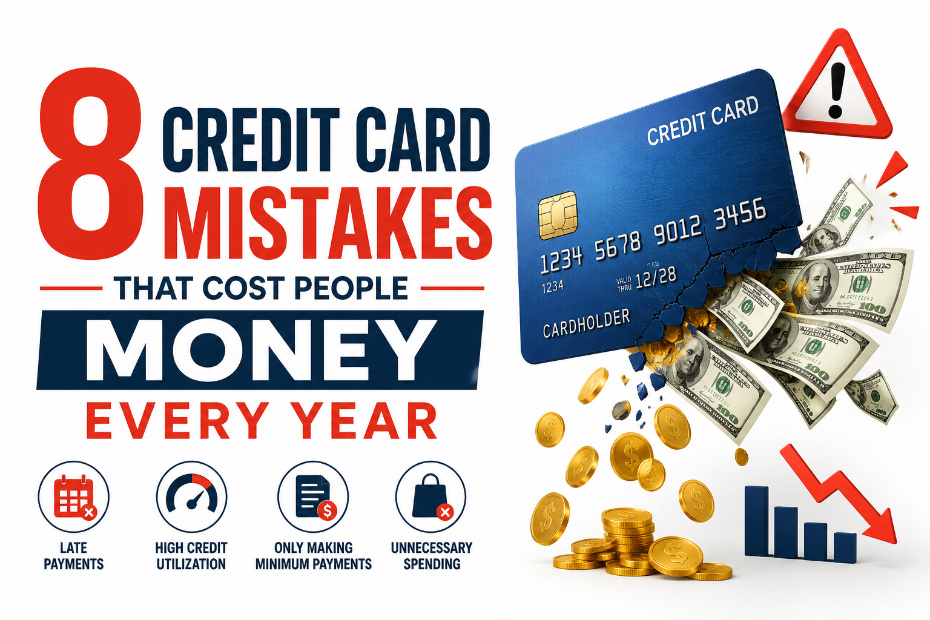
Millions of people use credit cards daily, yet many make costly mistakes that drain their finances. Credit cards can be powerful financial tools when used correctly. They help build credit history, earn rewards, and provide convenience. However, small mistakes can quickly become expensive habits.
Whether you’re a new cardholder or have been using credit cards for years, knowing these common pitfalls can help you save money, improve your credit score, and make better financial decisions.
Why Credit Card Mistakes Are So Expensive
Credit cards offer flexibility, but that flexibility comes with responsibility. Interest charges, late fees, penalty rates, and damaged credit scores can cost more than most people realize.
Many consumers focus only on monthly payments while ignoring the long-term impact of their decisions. Over time, even minor mistakes can add up to thousands of dollars in extra costs.
Let’s look at the eight most common credit card mistakes that cost people money every year and how to avoid them.
1. Paying Only the Minimum Payment
One of the biggest credit card mistakes is paying only the minimum amount due each month.
While making the minimum payment keeps your account in good standing, it does very little to reduce your actual debt. Most of your payment goes toward interest, not the principal balance.
Why This Costs Money
If you carry a balance and only make minimum payments:
- Interest continues to add up.
- Debt takes years to pay off.
- Total repayment costs increase significantly.
For example, a balance of $5,000 with a typical interest rate could take many years to pay off if only minimum payments are made.
Better Approach
Pay your full statement balance whenever possible. If that’s not realistic, pay significantly more than the minimum amount due.
2. Missing Payment Deadlines
Late payments are surprisingly common, especially for people managing multiple financial accounts.
A single missed payment can trigger several financial consequences.
Hidden Costs of Late Payments
- Late payment fees
- Interest charges
- Potential penalty APR increases
- Damage to credit history
Repeated missed payments can make borrowing more expensive, as lenders may see you as a higher-risk borrower.
Better Approach
Set up:
- Automatic payments
- Calendar reminders
- Banking alerts
Even scheduling automatic minimum payments can help prevent accidental late fees.
3. Carrying a High Credit Utilization Ratio
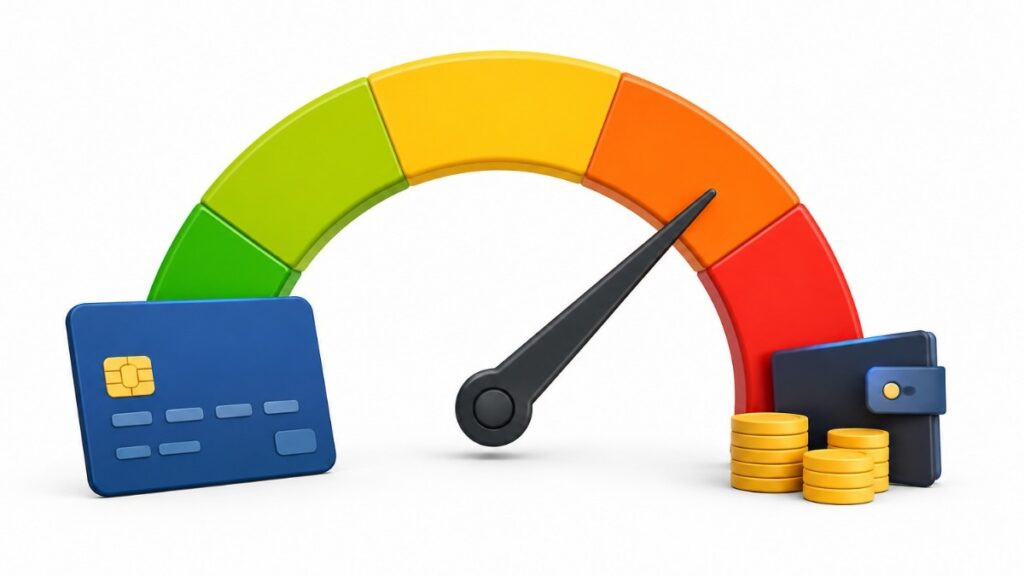
Credit utilization refers to how much of your available credit you’re using.
If your total credit limit is $10,000 and your balances total $8,000, your utilization ratio is 80%.
Why It Matters
Many people don’t realize that high utilization can hurt their credit score, even when payments are made on time.
High utilization signals financial stress to lenders.
Recommended Utilization Levels
Financial experts generally recommend keeping utilization below:
- 30% for good credit health
- 10% for excellent credit management
Better Approach
- Pay balances before statement closing dates.
- Request higher credit limits when appropriate.
- Spread spending across multiple cards responsibly.
4. Ignoring Credit Card Interest Rates
Many cardholders focus on rewards, sign-up bonuses, or cashback offers while ignoring interest rates.
This becomes expensive if a balance is carried from month to month.
The Real Cost of Interest
A rewards card offering 2% cashback may seem attractive, but carrying a balance with a high interest rate can quickly erase those rewards.
In many cases, the interest paid exceeds the value of earned rewards.
Better Approach
Before applying for a credit card:
- Compare APRs
- Understand introductory offers
- Know when promotional rates expire
If you regularly carry balances, prioritize lower-interest cards over rewards cards.
5. Applying for Too Many Credit Cards at Once
Many consumers apply for multiple cards within a short time to earn bonuses or increase available credit.
While this may seem beneficial, it can create unintended consequences.
Potential Problems
Each application may generate a hard inquiry on your credit report.
Multiple inquiries within a short period may:
- Lower your credit score temporarily
- Raise concerns among lenders
- Reduce approval chances for future applications
Better Approach
Apply for credit cards only when there is a clear financial reason.
Quality matters more than quantity.
Building a strong relationship with a few well-managed accounts is often more effective than managing many cards.
6. Using Credit Cards for Unplanned Spending
Credit cards make spending incredibly easy.
Because no cash physically leaves your wallet, it’s easier to underestimate how much you’re spending.
The Psychological Trap
Research shows that people tend to spend more when using credit than when paying with cash.
Impulse purchases become easier, and sticking to a budget becomes harder.
Signs of Trouble
- Buying items without a spending plan
- Relying on future income to pay current purchases
- Increasing balances every month
Better Approach
Use your credit card as a payment tool, not as extra income.
Always ensure you can afford purchases before swiping the card.
7. Neglecting Credit Card Statements
Many people glance at their balance and payment due date but never review the full statement.
This mistake can be costly.
What You Might Miss
- Unauthorized transactions
- Billing errors
- Fraudulent charges
- Subscription renewals
- Unexpected fees
Small charges often go unnoticed for months.
Better Approach
Review every monthly statement carefully.
Look for:
- Unknown merchants
- Duplicate charges
- Incorrect fees
- Recurring subscriptions you no longer use
Early detection can prevent larger losses later.
8. Chasing Rewards Without a Strategy
Rewards programs can provide real value, but many consumers spend more money just to earn points, miles, or cashback.
This behavior often defeats the purpose of the rewards system.
Common Reward Mistakes
- Spending unnecessarily to earn bonuses
- Paying annual fees that exceed reward value
- Carrying balances while trying to earn points
- Ignoring redemption rules
Why This Costs Money
If earning rewards leads to extra spending, the financial benefits disappear quickly.
A person spending $500 unnecessarily to earn a small reward is losing money, not saving it.
Better Approach
Choose rewards that match your existing spending habits.
Never increase spending just to earn points or cashback.
Rewards should be a bonus, not the reason for a purchase.
How These Mistakes Affect Your Financial Future
Many people think credit card mistakes only affect current finances.
In reality, they can impact long-term financial opportunities.
Poor credit management may affect:
- Mortgage approvals
- Car loan rates
- Personal loan eligibility
- Rental applications
- Insurance premiums in some regions
Small decisions today can influence borrowing costs for years.
That’s why responsible credit card usage is one of the most important personal finance skills anyone can develop.
Smart Habits That Save Money
Avoiding mistakes is important, but building good habits is even better.
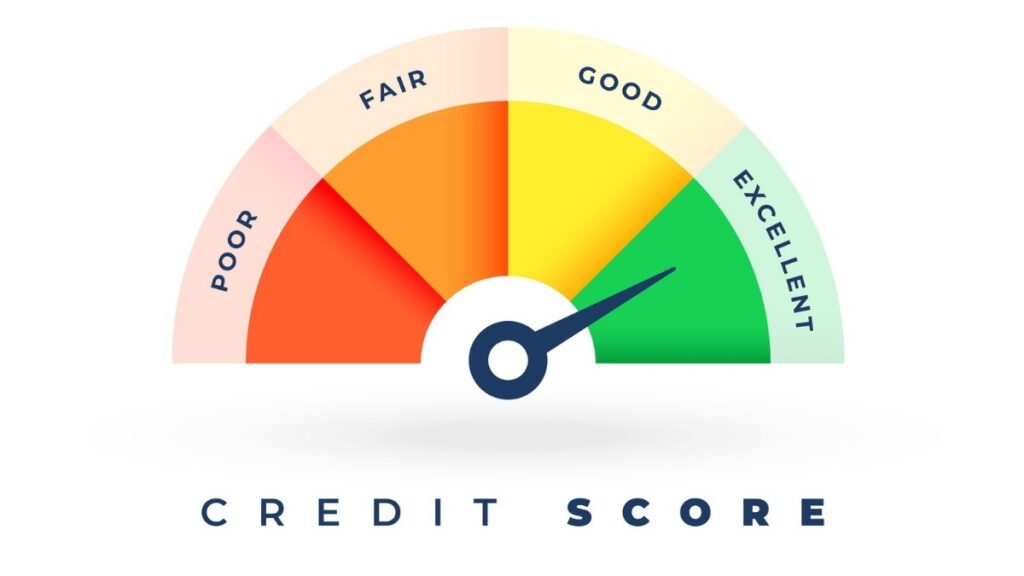
Here are a few practices used by financially successful credit card users:
Pay On Time Every Month
Payment history is one of the most important factors affecting creditworthiness.
Keep Balances Low
Lower balances generally support better financial management.
Review Statements Regularly
Monitoring accounts helps identify problems before they become expensive.
Understand Your Card’s Terms
Know your:
- Interest rate
- Annual fee
- Rewards structure
- Grace period
- Foreign transaction fees
Use Credit Responsibly
Treat credit cards as convenience tools, not borrowing tools.
Frequently Asked Questions
What is the most expensive credit card mistake?
Paying only the minimum payment is often the most expensive mistake because it allows interest to build up over long periods.
Does missing one payment hurt your credit score?
A single late payment can negatively impact your credit profile, especially if it becomes significantly overdue.
Is it bad to use a large percentage of my credit limit?
High credit utilization can lower credit scores and may indicate financial risk to lenders.
Should I close old credit cards?
Not always. Older accounts can positively impact your credit history length. Consider the potential impact before closing accounts.
Are credit card rewards worth it?
Yes, if balances are paid in full and spending habits stay the same. Rewards become less valuable when they encourage overspending or interest charges.
Final Thoughts
Credit cards can be some of the most useful financial tools today, but they can also get expensive when used carelessly. Most credit card problems don’t come from major financial mistakes; they start with small habits that seem harmless at first. Paying only the minimum balance, missing a due date, carrying high balances, or spending more than you planned can slowly hurt your financial progress.
The good news is that avoiding these mistakes doesn’t require special financial knowledge. It only takes awareness, discipline, and a clear understanding of how credit cards work. By paying your balance on time, keeping your utilization low, checking your statements regularly, and treating rewards as a bonus rather than a reason to spend, you can get the most out of credit cards while keeping costs down.
Financial success often comes from small, consistent decisions. The habits you build today can help you save money, maintain a strong credit profile, and create more financial flexibility in the future. Use your credit card as a tool that works for you, not one that works against you.
Written by Finphantix