

Buying a home is one of the biggest financial decisions you’ll ever make. Whether you’re getting your first apartment, building your dream house, or investing in real estate, picking the right home loan can save you a lot of money over the loan period.
With many banks and housing finance companies offering competitive loans, borrowers often find it hard to choose the best option. That’s why it’s important to understand home loan interest rates, home loan EMIs, home loan calculators, eligibility criteria, and lender features before you apply.
In this guide, we’ll compare the best home loan options in India for 2026 and help you make the right choice.
What Is a Home Loan and Why Does It Matter in 2026?
A home loan is a secured loan from banks and financial institutions that helps people buy, build, renovate, or extend residential properties.
In 2026, the rising property prices in major Indian cities have made affordable financing more important. A small change in your home loan interest can greatly affect your monthly EMI and total repayment amount.
For instance, a borrower taking a ₹50 lakh loan for 20 years could save several lakhs by choosing a lower interest rate.
That’s why comparing lenders before applying is vital.
Home Loan Calculator: Calculate Your EMI Before Applying
One of the most sought-after financial tools in India is the home loan calculator.
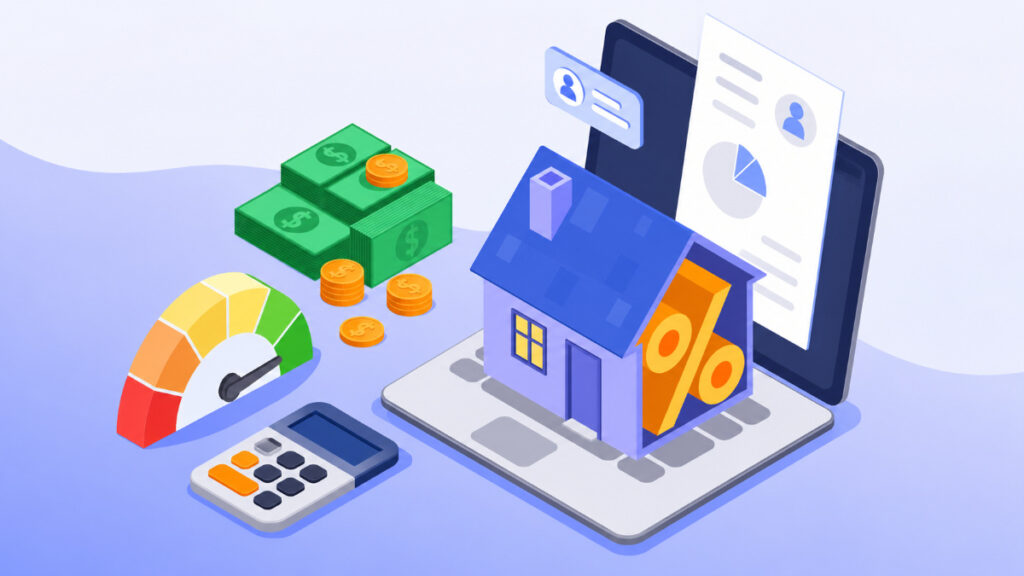
A home loan calculator helps borrowers estimate:
- Monthly EMI
- Total interest payable
- Total repayment amount
- Loan affordability
- Impact of different tenures
Instead of guessing whether a loan is within your means, you can calculate your exact monthly obligation before you submit an application.
Why Use a Home Loan Calculator?
Better Financial Planning
You’ll know exactly how much money you’ll need each month.
Compare Multiple Banks
A calculator makes it easy to compare lenders quickly.
Choose the Right Tenure
You can see how your EMI changes when the repayment period goes up or down.
Avoid Over-Borrowing
Many borrowers qualify for larger loans than they can comfortably repay. A calculator helps avoid this mistake.
Understanding Home Loan EMI and Monthly Repayments
Your home loan EMI is the fixed amount you pay every month until the loan is fully paid off.
EMI consists of:
Principal Amount
The actual amount borrowed from the lender.
Interest Amount
The charge paid to the bank for lending money.
In the early years, a larger portion of the EMI goes toward interest. As the loan progresses, a greater share of the EMI helps reduce the principal amount.
This is why the early years of the loan are especially important when considering prepayments.
60 Lakh Home Loan EMI: Real Example for Home Buyers
A commonly searched query is for 60 lakh home loan EMI because many urban homebuyers borrow within this range.

Let’s look at a practical example.
Loan Amount
₹60,00,000
Interest Rate
8.5%
Tenure
20 Years
Estimated EMI: Around ₹52,000 per month.
If the tenure extends to 30 years, the EMI may drop to about ₹46,000 per month. However, the total interest paid over the life of the loan will be significantly higher.
This shows why borrowers should consider both EMI affordability and total repayment cost before choosing a tenure.
Current Home Loan Interest Rate Trends in India
Understanding the current home loan interest rate situation can help borrowers time their application.
Interest rates depend on:
- RBI repo rate
- Inflation
- Banking liquidity
- Borrower credit profile
- Loan amount
- Employment stability
When repo rates rise, banks often increase lending rates. When repo rates fall, borrowers can benefit from lower EMIs, especially on floating-rate loans.
Keeping an eye on current home loan interest rate trends can help you get better financing terms.
Best Home Loan Interest Rates in India 2026
Many borrowers look for the best home loan interest rates before applying.

Here are some of the major lenders:
| Lender | Starting Interest Rate |
|---|---|
| SBI | 8.20% onwards |
| HDFC Bank | 8.25% onwards |
| ICICI Bank | 8.30% onwards |
| LIC Housing Finance | 8.35% onwards |
| Bajaj Housing Finance | 8.25% onwards |
| IDFC First Bank | 8.35% onwards |
Remember that these are starting rates. Your actual rate will depend on:
- Credit score
- Income level
- Occupation
- Property value
- Loan amount
Even a 0.25% drop in interest rate can save a borrower thousands of rupees each year.
HDFC Home Loan: Features, Interest Rates and Benefits
Among Indian borrowers, HDFC Home Loan remains one of the most trusted options.
HDFC has built a strong reputation through many years in housing finance.
Key Benefits of HDFC Home Loan
Competitive Interest Rates
HDFC offers attractive rates for eligible borrowers.
Flexible Repayment Tenures
Borrowers can choose repayment periods of up to 30 years.
Quick Processing
The loan approval process is fairly straightforward.
Digital Convenience
Customers can manage accounts online and don’t need to visit branches often.
Who Should Choose HDFC Home Loan?
- Salaried professionals
- First-time homebuyers
- Urban borrowers
- Individuals seeking digital banking convenience
SBI Home Loan: Interest Rates, Eligibility and EMI Options
SBI Home Loan is another popular option among Indian borrowers.
As India’s largest public-sector bank, SBI serves millions of customers around the country.
Advantages of SBI Home Loan
Competitive Pricing
SBI often has some of the lowest housing loan rates.
Wide Branch Network
Borrowers can access thousands of branches nationwide.
Trusted Brand
Many customers choose SBI because of its strong reputation.
Flexible Loan Options
Various borrower categories can find suitable products.
SBI Home Loan Eligibility
Factors considered include:
- Age
- Income
- Employment type
- Credit score
- Existing debt obligations
A solid financial profile improves your chances of approval and better interest rate offers.
LIC Housing Finance Home Loan Review
LIC Housing Finance is one of India’s leading housing finance companies.
It focuses mainly on housing loans rather than general banking services.
Benefits of LIC Housing Finance
Specialized Housing Expertise
The company has extensive experience in residential financing.
Long Loan Tenures
Borrowers can spread repayments over many years.
Competitive Rates
Eligible borrowers may receive good loan offers.
Flexible Borrowing Options
Options are available for both salaried and self-employed applicants.
For borrowers who want a dedicated housing finance provider, LIC Housing Finance is a strong contender.
ICICI Home Loan: Digital Banking and Loan Management
ICICI Bank has become a preferred lender for borrowers seeking speed and convenience.
Why Borrowers Choose ICICI Home Loan
Fast Digital Application
The application process is largely online.
Quick Documentation
Digital verification reduces paperwork requirements.
Convenient Account Management
Borrowers can track loans, statements, and repayment schedules online.
Flexible Repayment Options
Various repayment structures suit borrower needs.
ICICI is especially appealing to professionals comfortable managing their finances online.
How to Choose the Best Home Loan Company
Finding the best home loan company requires more than just comparing interest rates.
Consider the following factors:
Interest Rate
Lower rates typically mean lower overall borrowing costs.
Processing Fees
Some lenders charge high upfront fees.
Customer Service
Good support is valuable during long loan terms.
Digital Services
Online account access makes managing your loan easier.
Loan Flexibility
Look for hassle-free prepayment and balance transfer options.
Reputation
Choose lenders with solid customer trust and service records.
The best lender for you depends on your financial profile and goals.
Home Loan Eligibility Criteria in 2026
Most lenders assess several factors before approving a loan.

Age
Applicants usually need to be at least 21 years old.
Income
Stable and sufficient income is necessary.
Credit Score
A score above 750 is typically preferred.
Employment Stability
A longer work history boosts your credibility.
Existing Liabilities
Current loans and EMIs affect how much you can borrow.
Improving these factors before applying can significantly increase your chances of approval.
Documents Required for Home Loan Approval
Having your documents ready can speed up the process.
Identity Proof
- Aadhaar Card
- PAN Card
- Passport
- Driving License
Address Proof
- Utility Bills
- Aadhaar Card
- Passport
Income Documents
For salaried applicants:
- Salary slips
- Bank statements
- Form 16
For self-employed applicants:
- Income Tax Returns
- GST Returns
- Financial statements
Property Documents
- Sale agreement
- Title documents
- Approved plans
How Much Home Loan Can You Get on Your Salary?
One common question among homebuyers is how much home loan they can qualify for based on their monthly income. While each lender has its own criteria, most banks prefer that your total EMIs do not exceed 40% to 50% of your monthly income.
The table below provides a rough estimate:
| Monthly Salary | Approximate Home Loan Eligibility |
|---|---|
| ₹30,000 | ₹15–20 Lakh |
| ₹50,000 | ₹30–35 Lakh |
| ₹75,000 | ₹45–55 Lakh |
| ₹1,00,000 | ₹60–75 Lakh |
| ₹1,50,000 | ₹90 Lakh–1.2 Crore |
Your actual eligibility depends on factors such as Home Loan Eligibility, credit score, age, existing EMIs, and loan tenure. Borrowers with a strong financial profile often qualify for higher loan amounts at better interest rates.
Home Loan Processing Fees and Hidden Charges
Most borrowers compare only the Home Loan Interest Rate, but many overlook additional costs that can affect the overall expense of the loan.
Processing Fee
Banks usually charge a one-time fee for processing your application. This can range from 0.25% to 1% of the loan amount.
Legal Verification Charges
Lenders perform legal checks to verify property ownership and documentation.
Technical Inspection Charges
A technical expert may inspect the property before loan approval.
Documentation Charges
Some lenders charge fees for preparing and maintaining loan documents.
Prepayment and Foreclosure Charges
While most floating-rate home loans have minimal prepayment penalties, it’s essential to check the lender’s policy before signing the agreement.
Always ask for a complete list of charges before selecting a lender, even if they offer one of the Best Home Loan Interest Rates.
How to Reduce Your Home Loan EMI
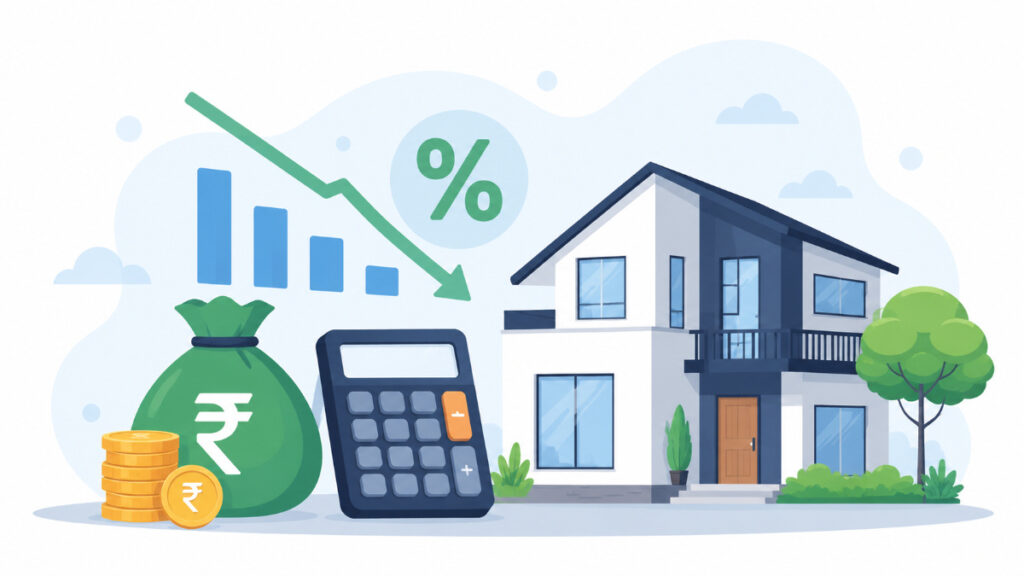
A lower Home Loan EMI can make repayment more manageable and reduce financial stress.
Make a Higher Down Payment
The larger your down payment, the smaller your loan amount and EMI.
Choose a Longer Loan Tenure
Extending the repayment period lowers EMI, though it increases total interest paid.
Improve Your Credit Score
Borrowers with strong credit scores often receive lower interest rates.
Compare Multiple Lenders
Different lenders offer various rates and repayment options.
Make Partial Prepayments
Using bonuses or extra income to reduce the principal can significantly lower future EMIs and interest costs.
Transfer Your Loan to a Lower-Rate Lender
If another bank offers a substantially lower rate, moving your loan may reduce your monthly payments.
Home Loan Balance Transfer: When Should You Switch Lenders?
A home loan balance transfer allows you to move your outstanding loan from one lender to another that offers better terms.
When a Balance Transfer Makes Sense
- Your current interest rate is significantly higher than market rates.
- Another lender offers lower EMIs.
- You need better customer service.
- You want additional loan features or flexibility.
Benefits of a Balance Transfer
- Lower Home Loan Interest Rate
- Reduced EMI
- Lower overall interest burden
- Better repayment flexibility
Things to Consider Before Transferring
- Processing charges
- Legal fees
- Remaining loan tenure
- Total savings after transfer
A balance transfer is usually most beneficial when a significant portion of the loan tenure is still remaining.
Home Loan Tax Benefits in 2026
One major advantage of taking a home loan is the tax benefit available under applicable Indian tax laws.
Tax Benefit on Principal Repayment
The principal part of your EMI may qualify for deductions based on applicable limits.
Tax Benefit on Interest Payments
Borrowers can claim deductions on the interest paid toward their home loan, subject to current tax regulations.
Benefits for Joint Home Loans
If two individuals co-own the property and repay the loan, both may be eligible for tax benefits separately, subject to eligibility.
Benefits for First-Time Homebuyers
Certain government schemes and tax provisions may offer additional advantages for eligible first-time buyers.
Since tax rules can change, it’s wise to consult a qualified tax professional before making financial decisions.
Best Home Loan Company for First-Time Home Buyers
Choosing the Best Home Loan Company depends on your financial needs and borrowing profile.

| Requirement | Recommended Lender |
|---|---|
| Lowest Interest Rates | SBI |
| Fast Approval Process | HDFC Home Loan |
| Best Digital Experience | ICICI Home Loan |
| Housing Finance Specialist | LIC Housing Finance |
| Flexible Loan Options | Bajaj Housing Finance |
Instead of choosing solely based on interest rates, compare customer service, repayment flexibility, processing fees, and digital tools.
For most first-time buyers, a lender that offers transparent terms and strong support can be more valuable than a slightly lower rate.
Fixed vs Floating Home Loan Interest Rate
When applying for a home loan, one of the most important decisions is whether to choose a fixed or floating interest rate. Both options have their pros and cons, and your best choice will depend on your financial situation and how much risk you’re willing to take.
Fixed Interest Rate
A fixed-rate home loan keeps the interest rate the same for a set period or for the entire loan duration, depending on the lender’s terms.
Benefits of a Fixed Interest Rate
- Your monthly payment remains predictable throughout the fixed-rate period.
- Easier budgeting and financial planning.
- Protection from rising interest rates.
Drawbacks of a Fixed Interest Rate
- Fixed rates are often higher than floating rates.
- Borrowers may miss out if market interest rates go down.
- Some lenders charge higher fees if you pay off the loan early or switch options.
A fixed-rate loan often works best for borrowers who want stability and wish to avoid uncertainty in their monthly payments.
Floating Interest Rate
A floating-rate home loan is tied to benchmark lending rates and changes based on market conditions.
Benefits of a Floating Interest Rate
- Typically starts with a lower interest rate.
- Borrowers gain when interest rates drop.
- Overall borrowing costs may be lower during periods of falling rates.
Drawbacks of a Floating Interest Rate
- Monthly payments may rise if rates increase.
- Planning your monthly repayment can become challenging.
- Long-term repayment costs might vary.
For many borrowers in India, floating-rate home loans are the preferred choice because they usually have lower rates over time.
Tips to Get a Lower Home Loan Interest Rate
Even a small drop in your home loan interest rate can lead to significant savings over the life of the loan.
Maintain a Strong Credit Score
A credit score above 750 increases your chances of getting better loan terms. Pay your EMIs and credit card bills on time, and avoid accumulating too much debt.
Increase Your Down Payment
A larger down payment lowers the lender’s risk and may help you get a better interest rate.
Compare Multiple Lenders
Don’t settle for the first loan offer you receive. Compare rates, fees, and terms from various banks and housing finance companies.
Keep Your Debt-to-Income Ratio Low
Lenders prefer borrowers whose current EMIs use a smaller share of their monthly income.
Negotiate With the Lender
Many borrowers accept the first deal they are given. If your credit profile is strong, you might negotiate a lower rate or reduced processing fees.
Consider a Balance Transfer
If another lender has significantly lower rates, transferring your home loan may ease your repayment burden.
Common Home Loan Mistakes to Avoid
Many borrowers focus only on getting the loan approved and overlook issues that affect their long-term financial health.
Borrowing More Than You Need
Taking out a larger loan means higher EMIs and more interest payments. Only borrow what you truly need.
Ignoring Processing Fees and Hidden Charges
Some lenders promote attractive rates but impose high processing fees or other costs.
Choosing a Very Long Loan Tenure
Lower EMIs can be tempting, but longer tenures greatly increase the total interest paid.
Not Checking Eligibility Before Applying
Submitting multiple loan applications can harm your credit profile. Check your eligibility before applying.
Ignoring Credit Score Improvement
A higher credit score can help you secure lower interest rates and better terms on your loan.
Skipping EMI Calculations
Always use a home loan calculator before finalizing a loan. Knowing your EMI obligations helps you avoid financial stress later.
Not Reading Loan Terms Carefully
Many borrowers overlook important details about prepayment rules, foreclosure charges, and interest rate changes.
Frequently Asked Questions
Which bank offers the best home loan in India in 2026?
Major lenders like HDFC Bank, SBI, ICICI Bank, LIC Housing Finance, and Bajaj Housing Finance offer competitive home loan products. The best option for you depends on your credit score, income, and loan needs.
What is the ideal credit score for a home loan?
A credit score of 750 or above is generally seen as excellent and may help you get lower interest rates.
Can I get a home loan if I am self-employed?
Yes. Most banks and housing finance companies grant home loans to self-employed people who can provide sufficient income proof and financial records.
How much down payment is required for a home loan?
Most lenders finance 75% to 90% of the property value. You must provide the rest as a down payment.
Can I prepay my home loan?
Yes. Most floating-rate home loans allow for partial or full prepayment without major penalties, though terms vary by lender.
Is a home loan EMI calculator accurate?
Yes. A home loan EMI calculator gives a close estimate of your monthly payments and is a crucial planning tool before applying for a loan.
Should I choose a fixed or floating interest rate?
Fixed rates offer stability, while floating rates provide flexibility and potential savings if market rates fall. The right choice for you depends on your financial goals and risk tolerance.
Final Thoughts
Finding the Best Home Loan in India 2026 takes more than just comparing interest rates. A smart borrower looks at the entire loan package, including EMI affordability, lender reputation, processing fees, repayment flexibility, customer service, and long-term borrowing costs.

Before applying, use a home loan calculator to estimate repayments, compare offers from leading lenders like HDFC Home Loan, SBI Home Loan, ICICI Home Loan, and LIC Housing Finance, and ensure your monthly EMI fits your budget comfortably.
Keep in mind that a home loan is a long-term commitment that can last 20 to 30 years. Taking the time to compare options now can save you a significant amount in interest over the life of the loan. By maintaining a healthy credit score, choosing the right tenure, and selecting a lender that matches your financial needs, you can make your dream of homeownership a solid investment for the future.
Written by Finphantix