

Real estate has been a reliable way to build wealth, generate cash flow, and achieve financial freedom. While stocks and bonds often dominate investments, real estate still attracts those looking for stable income, long-term growth, and a balanced portfolio.
The positive news is that in 2026, real estate investing isn’t just for wealthy people buying large apartment complexes or commercial properties. Today, there are many real estate investment options available that suit various budgets, risk preferences, and financial objectives.
Whether you want passive income, long-term wealth, or protection against inflation, knowing the different ways to invest in real estate can help you make better financial choices.
This guide will cover seven effective ways to invest in real estate and build passive income in 2026, along with their benefits, risks, and best strategies for beginners.
Why Real Estate Remains a Popular Investment in 2026
Real estate is still one of the world’s most favored asset classes for several reasons.
Unlike many investments, real estate can earn income while also increasing in value over time. Investors can benefit from rental income, property appreciation, tax breaks, and portfolio diversification.
Some key benefits of real estate investing include:
- Consistent cash flow potential
- Protection against inflation
- Long-term wealth creation
- Portfolio diversification
- Multiple income sources
- Ownership of a tangible asset
These benefits help explain why many successful investors allocate part of their portfolios to real estate.
How Real Estate Creates Passive Income
Before looking at investment strategies, it’s crucial to understand how real estate generates passive income.

Most real estate investors make money through:
Rental Income
Tenants pay monthly rent, providing regular cash flow.
Property Appreciation
Property values can rise over time, allowing investors to profit upon sale.
Real Estate Dividends
Some investments, like REITs, pay out profits to investors through dividends.
Tax Benefits
Many countries provide tax incentives for property owners and real estate investors.
Combining these income streams can lead to a powerful wealth-building strategy.
7 Ways to Invest in Real Estate

1. Buy Rental Properties
Rental properties are a common form of real estate investing.
Investors buy residential properties and rent them out to tenants for monthly income.
Examples include:
- Single-family homes
- Duplexes
- Apartments
- Vacation rentals
Advantages of Rental Properties
- Predictable monthly cash flow
- Long-term property appreciation
- More control over investment choices
- Potential tax benefits
Risks of Rental Properties
- Costs for property maintenance
- Periods with no tenants
- Issues with tenants
- Unexpected repairs
Best For
Investors who are willing to manage properties themselves or hire property managers.
2. Invest in Real Estate Investment Trusts (REITs)
For those wanting exposure to real estate without owning physical properties, REITs (Real Estate Investment Trusts) are a great option.
REITs are companies that own and manage income-producing real estate.
These can include:
- Office buildings
- Shopping centers
- Warehouses
- Apartment communities
- Healthcare facilities
Investors buy shares of REITs like stocks.
Advantages of REITs
- Low investment requirements
- High liquidity
- Potential for dividend income
- No responsibilities for property management
Risks of REITs
- Market fluctuations
- Sensitivity to interest rates
- Less control than owning property directly
Best For
Beginners looking for passive exposure to real estate.
3. Invest in Real Estate ETFs
Real Estate ETFs offer diversified exposure to various REITs and real estate companies in one investment.
Instead of buying individual REITs, investors can access a wide range of real estate assets.
Advantages of Real Estate ETFs
- Diversification
- Lower risk compared to individual properties
- Easy buying and selling
- Low maintenance
Risks of Real Estate ETFs
- Market changes
- Limited control over holdings
Best For
Investors wanting a hands-off approach to real estate.
4. Buy Short-Term Rental Properties
The rise of travel platforms has opened new opportunities for investors.
Short-term rentals allow property owners to earn money by renting to travelers and vacationers.
Examples include:
- Vacation homes
- Tourist apartments
- Holiday rentals
Advantages of Short-Term Rentals
- Higher income potential
- Flexible use of properties
- Strong demand in popular areas
Risks of Short-Term Rentals
- Seasonal demand changes
- More management needed
- Local regulations
Best For
Investors in tourist-friendly areas.
5. Invest in Commercial Real Estate
Commercial real estate includes properties used for business.
Examples are:
- Office buildings
- Retail centers
- Warehouses
- Industrial facilities
Commercial leases tend to be longer than residential leases, providing more stable income.
Advantages of Commercial Real Estate
- Higher earning potential
- Long-term lease contracts
- Professional tenants
Risks of Commercial Real Estate
- Higher initial investment
- Susceptibility to economic shifts
- Risk of vacancies
Best For
Experienced investors seeking larger opportunities.
6. Real Estate Crowdfunding
Real estate crowdfunding platforms let multiple investors pool their resources to invest in large projects.
This model has grown in popularity because it makes entry easier.
Investors can access:
- Apartment projects
- Commercial ventures
- Mixed-use properties
- Residential developments
Advantages of Crowdfunding
- Lower investment minimums
- Opportunities for diversification
- Access to larger projects
Risks of Crowdfunding
- Limited liquidity
- Risks related to platforms
- Risks specific to projects
Best For
Investors seeking alternative real estate options.
7. Invest in Real Estate Development Projects
Some investors get involved in property development projects.
This can mean financing:
- New residential neighborhoods
- Apartment complexes
- Commercial developments
- Renovations
Development investments can yield high returns but usually involve more risk.
Advantages of Development Projects
- Potential for high returns
- Access to growing markets
- Significant appreciation opportunities
Risks of Development Projects
- Delays in construction
- Cost overruns
- Market downturns
Best For
Experienced investors with higher risk tolerance.
Direct vs Indirect Real Estate Investing
One of the first decisions every real estate investor must make is whether to pursue direct or indirect real estate investing. Both approaches can help build wealth and generate passive income, but they require different levels of involvement, capital, and risk tolerance.

Direct Real Estate Investing
Direct investing involves purchasing physical properties such as rental homes, apartment buildings, vacation rentals, or commercial real estate.
Benefits include:
- Greater control over the investment
- Direct ownership of real estate assets
- Potential for higher cash flow
- Property appreciation opportunities
However, owning property also comes with responsibilities like maintenance, tenant management, insurance, and repairs.
Indirect Real Estate Investing
Indirect investing allows investors to gain exposure to the real estate market without owning physical property.
Examples include:
- REITs
- Real Estate ETFs
- Real Estate Crowdfunding
- Fractional Real Estate Investing
This approach is often preferred by investors seeking passive income with minimal day-to-day involvement.
Real Estate Investing for Beginners: Where Should You Start?
For beginners, the number of available real estate investment options can feel overwhelming. The best approach is often to start with lower-risk investments while learning how the market works.
Many new investors begin with:
- REITs
- Real Estate ETFs
- Fractional Real Estate Investing
These investments provide exposure to the real estate sector without requiring large amounts of capital.
As experience grows, investors may expand into rental properties, commercial real estate, or development projects.
The most important step is starting with a strategy that matches your financial goals, available capital, and risk tolerance.
Tax Benefits of Real Estate Investing
One reason many investors choose real estate investing is the potential tax advantages associated with property ownership.
While tax rules vary by country, real estate often offers benefits that may improve overall investment returns.
Depreciation
Property owners may be able to deduct depreciation expenses over time, reducing taxable income.
Mortgage Interest Deductions
In some jurisdictions, interest paid on investment property loans may qualify for tax deductions.
Rental Expense Deductions
Property management fees, maintenance costs, insurance, and certain operating expenses may also be deductible.
Capital Gains Considerations
Long-term real estate investors may benefit from favorable tax treatment when selling appreciated properties, depending on local tax laws.
Because tax regulations differ across countries, investors should always consult a qualified tax professional before making decisions.
How to Analyze a Real Estate Investment Before Buying
Successful real estate investing begins with proper research and analysis. Buying a property based solely on emotions or market hype can lead to poor results.

Location Analysis
Location remains one of the most important factors in real estate. Strong employment growth, population growth, and infrastructure development often support long-term property values.
Rental Yield
Investors should estimate how much rental income a property can generate relative to its purchase price.
Cash Flow Potential
Positive cash flow occurs when rental income exceeds expenses. Many successful investors prioritize cash-flow-positive properties.
Vacancy Rates
Areas with lower vacancy rates often provide more stable rental demand and income opportunities.
Careful analysis helps investors reduce risk and identify higher-quality opportunities.
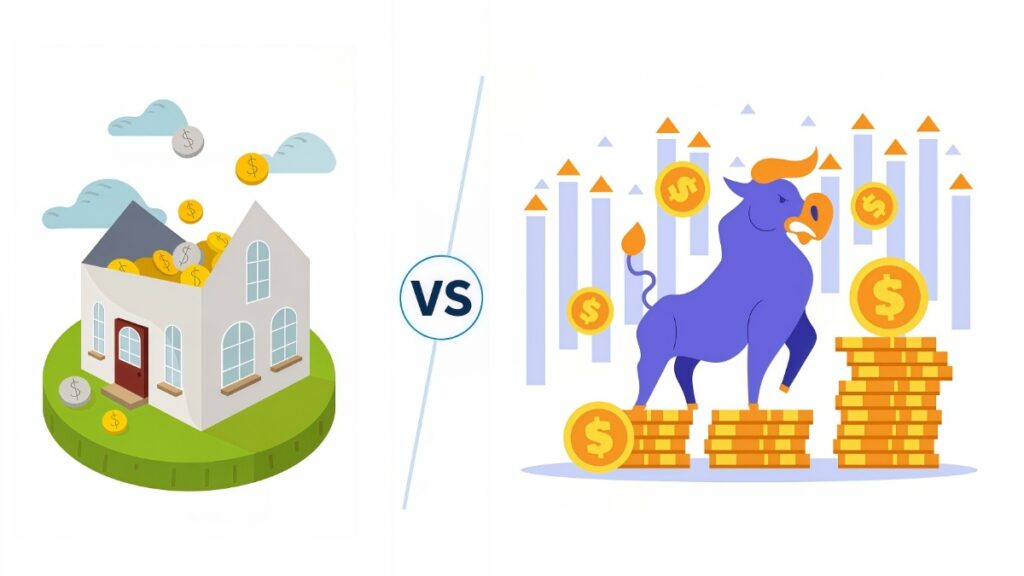
Real Estate vs Stocks: Which Is Better for Passive Income?
Both real estate investing and stock market investing can be effective ways to build wealth and generate passive income.
| Factor | Real Estate | Stocks |
|---|---|---|
| Passive Income | Rental Income | Dividends |
| Liquidity | Lower | Higher |
| Diversification | Moderate | High |
| Management Required | Often Higher | Lower |
| Capital Requirement | Usually Higher | Usually Lower |
Real estate offers tangible asset ownership and rental cash flow, while stocks provide greater liquidity and easier diversification.
For many investors, the best solution is not choosing one over the other but combining both asset classes within a diversified portfolio.
Real Estate Market Trends to Watch in 2026
The real estate market continues to evolve, creating new opportunities for investors worldwide.
Growth of REIT Investing
REITs remain one of the most accessible ways to generate passive income through real estate.
Expansion of Fractional Real Estate Investing
Technology platforms are making property ownership more accessible through fractional investment models.
Strong Demand for Rental Housing
Population growth and affordability challenges continue to support demand for rental properties in many regions.
Digital Real Estate Platforms
Online investing platforms are simplifying access to real estate investments for both new and experienced investors.
Understanding these trends can help investors position themselves for future opportunities while building a diversified real estate portfolio.
Rental Properties vs REITs: Which Is Better?
A common question among investors is whether to buy physical property or invest in REITs.
| Feature | Rental Property | REITs |
|---|---|---|
| Initial Capital | High | Low |
| Passive Income | High | Moderate |
| Liquidity | Low | High |
| Management Required | High | Low |
| Diversification | Low | High |
| Control | High | Low |
The best choice depends on your goals, available funds, and how involved you want to be.
How Much Money Do You Need to Start Investing in Real Estate?
Many believe that real estate investing takes a lot of money.
In reality, it varies greatly.
Rental Properties
They often need significant upfront capital.
REITs
These can be bought with relatively small amounts.
Real Estate ETFs
They are accessible for most investors.
Crowdfunding
Many platforms allow investors to start with smaller amounts than buying property directly.
This flexibility makes real estate more accessible than ever.
Common Real Estate Investing Mistakes
Avoiding common errors can significantly enhance investment results.
Buying Without Research
Always research the market before investing.
Underestimating Expenses
Property taxes, insurance, maintenance, and vacancies can all affect returns.
Ignoring Cash Flow
Staying positive with cash flow should be a key focus.
Lack of Diversification
Don’t put all investments in one property or area.
Chasing Trends
Focus on long-term fundamentals instead of short-term hype.
How to Choose the Best Real Estate Investment Strategy
Choosing the right strategy depends on several factors.
Your Budget
Some strategies require more money than others.
Risk Tolerance
Higher returns usually come with higher risks.
Time Commitment
Some investments need active management while others are more passive.
Financial Goals
Decide if your priority is income, appreciation, or diversification.
Aligning your strategy with your goals can lead to better long-term results.
Is Real Estate a Good Investment in 2026?
Despite fluctuating economic conditions, real estate remains a valuable asset class for many investors.
Increasing populations, housing demand, urban growth, and long-term economic progress continue to create opportunities in residential, commercial, and alternative real estate sectors.
While no investment is free from risk, real estate offers unique benefits that are hard to replicate with many other asset classes.
For those seeking passive income, diversification, and long-term wealth, real estate is still an attractive choice in 2026.
Frequently Asked Questions
Frequently Asked Questions
What Is the Best Real Estate Investment for Beginners?
For most beginners, REITs (Real Estate Investment Trusts) and Real Estate ETFs are often the easiest ways to start investing in real estate. They require less money than buying physical property and let investors gain exposure to the real estate market without dealing with tenants, maintenance, or property management.
Can Real Estate Really Generate Passive Income?
Yes. Real estate can create passive income through rental properties, REIT dividends, real estate ETFs, and crowdfunding investments. While some strategies need more involvement than others, many investors use real estate to establish recurring income that helps achieve long-term financial goals.
Are REITs Better Than Owning Rental Properties?
Neither option is universally better. REITs offer convenience, liquidity, and diversity, while rental properties provide more control and the chance for higher cash flow. The right choice depends on your investment goals, available capital, and preferred level of involvement.
How Much Money Do You Need to Start Investing in Real Estate?
The amount varies based on the investment strategy. Some real estate investments, like REITs and ETFs, can start with relatively small amounts of money, while buying rental properties or commercial real estate usually needs significantly more capital.
Is Real Estate a Good Long-Term Investment?
Historically, real estate has been one of the most popular long-term investments because it provides opportunities for income generation, property appreciation, and diversity. While market conditions can change, many investors still see real estate as an important part of a long-term wealth-building plan.
Final Thoughts

Real estate remains one of the most effective ways to build wealth and generate passive income over the long term. Whether you choose rental properties, REITs, real estate ETFs, crowdfunding platforms, or commercial real estate, each strategy offers unique benefits and chances.
The key step is picking an investment approach that fits your financial goals, risk tolerance, and available capital. Some investors prefer the hands-on nature of owning property, while others appreciate the simplicity and flexibility of publicly traded real estate investments.
Instead of focusing on finding the perfect investment, concentrate on developing a steady, long-term strategy. Investors who conduct thorough research, diversify their portfolios, and remain patient are often in a better position to benefit from the income and growth opportunities that real estate can offer.
As we move through 2026, real estate continues to be an attractive asset class for investors seeking financial independence, passive income, and long-term wealth creation. With multiple entry points available, there has never been a better time to explore how real estate can fit into your overall investment plan.
Written by Finphantix