
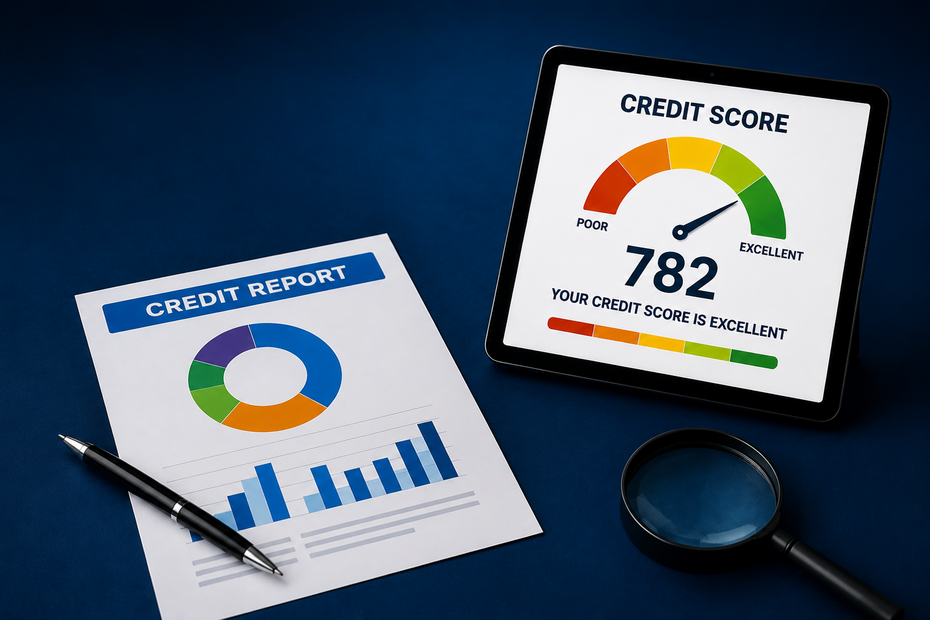
If you’re planning to apply for a credit card, personal loan, mortgage, or rent an apartment, you’ve likely seen the terms credit score and credit report. While these terms often go together, they are not the same.
Understanding the difference between a credit report and a credit score is a crucial step toward building a solid financial future. A good credit profile can help you get better loans, lower interest rates, and higher credit limits. Poor credit, however, can make borrowing money more expensive and challenging.
In this guide, you’ll learn what a credit score is, what a credit report includes, how both work together, and how you can improve your creditworthiness over time.
What Is a Credit Score?
A credit score is a three-digit number that indicates how likely you are to repay borrowed money on time. It gives lenders a quick view of your financial reliability.
In many countries, the most common credit score range is 300 to 850. Generally, a higher score means a lower risk for lenders.
Here’s a general breakdown of credit score ranges:
| Credit Score | Rating |
|---|
| 300–579 | Poor |
| 580–669 | Fair |
| 670–739 | Good |
| 740–799 | Very Good |
| 800–850 | Excellent |
A higher score usually means you have managed your credit responsibly over time, while a lower score may indicate missed payments, high debt, or limited credit history.
Think of your credit score as your financial reputation. The stronger your reputation, the more confidence lenders have in lending you money.
Why Is a Credit Score Important?
Your credit score impacts more than just loan approvals.
A good credit score can help you:
- Qualify for personal loans more easily
- Get approved for premium credit cards
- Receive lower interest rates
- Increase your chances of mortgage approval
- Obtain higher credit limits
- Access better financing offers
Even a small increase in your credit score can save you thousands in interest over the life of a loan.
What Is a Credit Report?
A credit report is a detailed account of your borrowing and repayment history. Unlike your credit score, which is just a number, your credit report contains the details that help calculate that number.
A typical credit report includes:
- Personal identification information
- Current and past credit accounts
- Credit card balances
- Payment history
- Loan information
- Mortgage accounts
- Credit inquiries
- Collections
- Public records (where applicable)
- Closed accounts
Your credit report is updated regularly as lenders report new information to credit bureaus.
In simple terms, your credit report tells the story of how you have managed credit over time.
Credit Report vs Credit Score: What’s the Difference?
Many people mistakenly think these terms mean the same thing.
In reality, they serve different purposes.
| Credit Score | Credit Report |
| A three-digit number | A detailed financial record |
| Summarizes your credit risk | Shows your complete credit history |
| Used for quick lending decisions | Used for detailed financial review |
| Calculated using report data | Contains the information used to calculate the score |
| Changes as new information is reported | Updated whenever lenders submit new account information |
Simply put:
Your credit report is the data.
Your credit score is the result of analyzing that data.
Both are important because lenders often look at both before approving credit.
How Is a Credit Score Calculated?
Although different scoring models exist, most credit scores rely on similar factors.
1. Payment History
Payment history is the most important factor.
Paying your bills on time consistently shows that you are a responsible borrower.
Late or missed payments can significantly lower your score.
2. Credit Utilization
Credit utilization measures how much of your available credit you are currently using.
For example:
- Credit Limit: $10,000
- Current Balance: $2,000
Your utilization ratio is 20%.
Experts generally suggest keeping credit utilization below 30%, while under 10% is ideal.
3. Length of Credit History
Older credit accounts demonstrate to lenders that you have experience managing credit.
Keeping older accounts open may help increase your average credit age.
4. Credit Mix
Having different types of credit may help your score.
Examples include:
- Credit cards
- Personal loans
- Auto loans
- Student loans
- Mortgages
A healthy mix shows that you can manage various forms of credit responsibly.
5. New Credit Applications
Applying for several credit cards or loans in a short time may temporarily reduce your score.
Each hard inquiry can slightly lower your credit score.
Only apply for new credit when necessary.
What Information Appears on a Credit Report?
Your credit report contains much more than your credit score.
Common sections include:
Personal Information
- Name
- Address
- Date of birth
- Social Security Number or national identification (where applicable)
Credit Accounts
This section lists:
- Credit cards
- Loans
- Mortgages
- Account opening dates
- Credit limits
- Current balances
Payment History
This shows if you made payments on time or missed them.
This is one of the most critical sections lenders review.
Credit Inquiries
Your report notes when lenders check your credit.
There are two types:
Soft Inquiry
This occurs when you check your own credit score or when companies conduct background checks.
Soft inquiries do not affect your score.
Hard Inquiry
This happens when you apply for new credit.
Multiple hard inquiries in a short period may temporarily lower your score.
Public Records
Depending on your country, this may include:
- Bankruptcy
- Court judgments
- Tax liens (where applicable)
What Can Lower Your Credit Score?
Several financial habits can negatively affect your score.
These include:
- Missing loan payments
- Paying credit card bills late
- High credit card balances
- Loan defaults
- Collections
- Bankruptcy
- Applying for too many credit accounts
- Closing old credit accounts unnecessarily
The good news is that many of these issues can improve over time with responsible financial behavior.
How to Improve Your Credit Score
Building a strong credit score requires consistency rather than quick fixes.
Pay Every Bill on Time
Your payment history has the most significant impact on your credit score.
Setting up automatic payments or reminders can help you avoid missed due dates.
Keep Credit Utilization Low
Avoid using most of your available credit limit.
Lower utilization indicates responsible credit management.
Avoid Unnecessary Credit Applications
Only apply for loans or credit cards when you truly need them.
Too many hard inquiries can temporarily lower your score.
Check Your Credit Report Regularly
Review your credit report for errors or fraudulent activity.
If you notice inaccurate information, contact the relevant credit bureau to dispute the mistake.
Keep Older Accounts Open
Older accounts contribute to a longer credit history.
Closing long-standing accounts may reduce your average account age.
Build Credit Responsibly
If you’re new to credit, start with manageable credit products and always repay them on time.
Responsible borrowing is the foundation of a healthy credit profile.
What Is Considered a Good Credit Score?
A good credit score depends on the scoring model used, but generally, a score of 670 or higher is seen as good. A higher score indicates that you have a history of managing credit well.
Here’s a simple breakdown of credit scores:
| Credit Score | Rating |
|---|---|
| 300–579 | Poor |
| 580–669 | Fair |
| 670–739 | Good |
| 740–799 | Very Good |
| 800–850 | Excellent |
Moving your score from one category to the next can help you qualify for better interest rates and borrowing options.
How Long Does Information Stay on Your Credit Report?
Not all information stays on your credit report forever. Different types of credit information last for different amounts of time based on your country’s credit reporting rules.
In general:
- On-time payments may stay for several years.
- Late payments usually remain on your report for multiple years.
- Hard inquiries often stay for up to two years.
- Bankruptcies and other major negative records may stay longer, depending on local laws.
Negative information loses its impact over time, especially if you keep using credit responsibly.
Mistakes to Avoid That Can Damage Your Credit Score
Many people lower their credit score without meaning to by making simple mistakes.
Some common mistakes include:
- Missing payment due dates
- Maxing out credit cards
- Applying for multiple credit cards in a short time
- Ignoring errors on your credit report
- Closing old credit accounts without a good reason
- Defaulting on loans
- Making only minimum payments while carrying large balances
Avoiding these mistakes and keeping good financial habits can help you protect and improve your credit score over time.
Common Myths About Credit Scores
Myth 1: Checking Your Own Credit Score Hurts It
False.
Checking your own credit score is a soft inquiry and does not affect your score.
Myth 2: You Need Debt to Have Good Credit
Not necessarily.
You only need to use credit responsibly and make payments on time.
Myth 3: Closing Credit Cards Always Improves Your Score
Closing older credit cards can actually reduce your average credit history and increase your credit utilization.
Myth 4: A High Income Means a High Credit Score
Income and credit score are different.
Someone with a high income can still have poor credit if they mismanage debt.
Frequently Asked Questions
1. What is a credit score?
A credit score is a three-digit number that shows how reliable you are in paying back borrowed money on time.
2. What is a good credit score?
In most credit scoring systems, a score of 670 or higher is seen as good. Scores above 740 are typically regarded as very good or excellent.
3. What is the difference between a credit report and a credit score?
A credit report is a detailed account of your credit history. A credit score is a number that summarizes the information in your credit report.
4. How often does a credit score update?
Credit scores can change whenever lenders report new information, like payments, balances, or new accounts.
5. Does checking my own credit score hurt my credit?
No. Checking your own credit score results in a soft inquiry, which does not affect your credit score.
6. What factors affect a credit score?
The main factors are payment history, credit utilization, length of credit history, credit mix, and new credit inquiries.
7. How can I improve my credit score?
You can improve your credit score by paying bills on time, keeping credit card balances low, avoiding unnecessary credit applications, and checking your credit report regularly.
8. Can I get a loan with a low credit score?
Yes, but you may have to deal with higher interest rates, stricter approval requirements, and fewer lending options compared to those with good credit scores.
Final Thoughts
Understanding the difference between a credit report and a credit score is important for building long-term financial success. Your credit report contains all details of your borrowing history, while your credit score gives a quick overview of your financial reliability.
A strong credit score can help you get better loan terms, lower interest rates, and more financial opportunities. By paying bills on time, keeping credit utilization low, checking your credit report, and using credit responsibly, you can gradually improve your credit profile.
Remember, good credit does not happen overnight. Consistent financial habits and responsible credit use are essential for achieving and keeping an excellent credit score over the years.
Written by Finphantix