
Most people believe that wealth comes from earning a high salary, picking the right stock, or being lucky in crypto. In reality, long-term wealth is mainly built through one simple financial principle: compound interest.
It may not be flashy or popular on social media. But it gradually transforms small, regular investments into significant sums over time.
If you truly grasp how compound interest functions over 10, 20, and 30 years, you’ll view saving, investing, and retirement in a whole new way.
In this guide, we’ll explain compound interest in simple terms using clear examples, charts, and long-term scenarios. Whether you’re investing in index funds, retirement accounts, mutual funds, or savings plans, this is the concept that changes everything.
What Is Compound Interest?
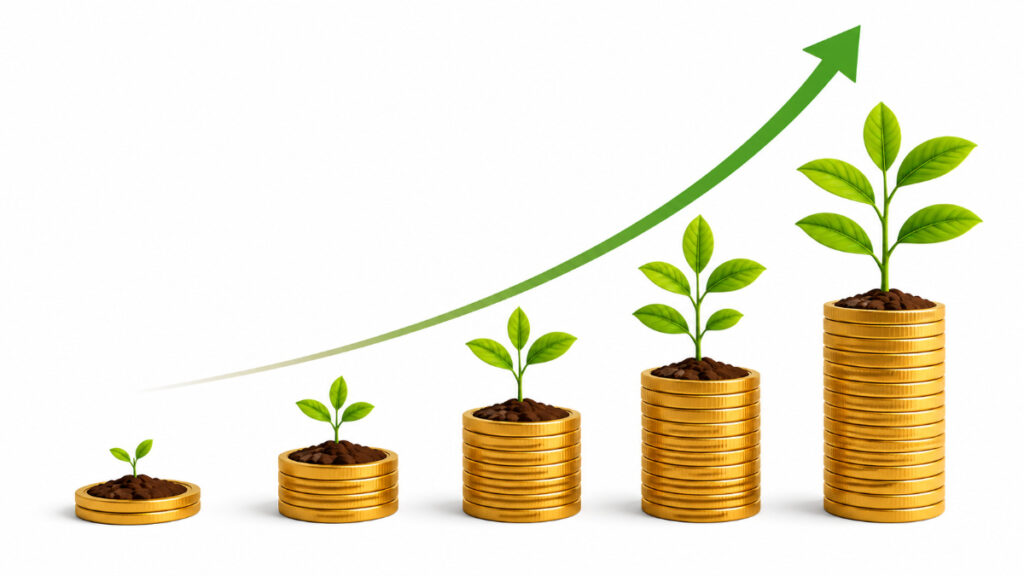
Compound interest is when your money earns returns, and those returns begin generating returns as well.
In simpler terms:
- You invest money.
- Your investment grows.
- The growth starts growing too.
This creates a snowball effect.
Here’s the formula for compound interest:
A = P(1 + r/n)^(nt)
Where:
- A = final amount
- P = principal (initial investment)
- r = annual interest rate
- n = number of times interest compounds each year
- t = number of years
You don’t need to memorize this formula. What’s important is understanding how time multiplies money.
Why Compound Interest Matters More Than Salary
A person earning $60,000 a year who invests steadily from age 25 can end up wealthier than someone earning $150,000 who starts investing late.
This happens because compound interest rewards:
- Time in the market
- Consistency
- Patience
- Reinvestment
The sooner you start, the less money you need to invest.
This is why experienced investors often say:
“Time is more important than timing.”
Simple Example of Compound Interest
Let’s consider a basic example.
Imagine you invest:
- $10,000
- At an average annual return of 8%
- Without adding extra money.
After 10 years:
- Your money grows to around $21,589.
After 20 years:
- It grows to around $46,610.
After 30 years:
- It grows to around $100,627.
Look at these important points:
- The first 10 years added about $11,000.
- The next 10 years added about $25,000.
- The final 10 years added more than $54,000.
The longer your money stays invested, the faster it grows.
Compound Interest Over 10 Years
The first decade can feel slow.
This is when many investors give up too soon because the gains don’t seem life-changing yet.

Example: Investing $500 Monthly
Let’s say you invest:
- $500 every month
- With an average annual return of 8%
- Over 10 years.
At the end of 10 years:
- Total invested: $60,000
- Approximate portfolio value: $91,000+
This means roughly:
- $31,000 came from growth.
It’s a decent return, but compounding is just starting to kick in.
10-Year Growth Chart
| Year | Approximate Value |
|---|---|
| 1 | $6,200 |
| 3 | $20,000 |
| 5 | $36,700 |
| 7 | $56,800 |
| 10 | $91,000 |
The line appears smooth at first.
But it becomes steeper later.
Compound Interest Over 20 Years
Now it gets exciting.
In the second decade, compound interest starts doing most of the work.

Using the same example:
- $500 invested monthly
- 8% annual return
- Over 20 years.
Results:
- Total invested: $120,000
- Portfolio value: Approximately $295,000+
Growth alone added nearly:
- $175,000.
Now your gains exceed your contributions.
That’s the true strength of compounding.
20-Year Growth Chart
| Year | Approximate Value |
|---|---|
| 5 | $36,700 |
| 10 | $91,000 |
| 15 | $173,000 |
| 20 | $295,000 |
Notice how the increase between years 15 and 20 is massive compared to earlier years.
This is why long-term investors rarely panic during short-term market drops.
They see the bigger picture.
Compound Interest Over 30 Years
This is where wealth creation really takes off.

Using the same numbers again:
- $500 monthly investment
- 8% annual return
- Over 30 years.
Final results:
- Total invested: $180,000
- Approximate portfolio value: $745,000+
This means:
- More than $565,000 came purely from investment growth.
Your money produced over three times your contributions.
This is why people who invest in their 20s often have a big advantage later in life.
30-Year Growth Chart
| Year | Approximate Value |
|---|---|
| 5 | $36,700 |
| 10 | $91,000 |
| 15 | $173,000 |
| 20 | $295,000 |
| 25 | $476,000 |
| 30 | $745,000 |
The curve grows steeper over time.
That’s when compound interest truly changes lives.
Why Time Is the Biggest Factor
Most beginners think investment success relies mainly on finding high returns.
But time is much more important.
Consider this example.
Investor A
- Starts at age 25
- Invests $400/month
- Stops after 10 years
- Never contributes again.
Investor B
- Starts at age 35
- Invests $400/month for 30 years.
Surprisingly, Investor A can still end up with similar wealth at retirement because their money had more time to compound.
This shows why starting early is better than investing heavily later.
The Snowball Effect Explained Simply
Compound interest is like a snowball rolling downhill.

At first:
- Growth seems small.
- Progress feels slow.
But eventually:
- The snowball grows huge.
- Momentum takes over.
This is exactly how long-term investing works.
Most wealth growth happens in the later years, not the early years.
What Rate of Return Should You Expect?
Historically, long-term stock market returns in the U.S. have averaged around 7% to 10% annually, depending on the index and time frame.
Typical long-term assumptions:
| Investment Type | Historical Average |
|---|---|
| High-yield savings | 3%–5% |
| Bonds | 4%–6% |
| Index funds | 7%–10% |
| Growth stocks | 10%+ (higher risk) |
For realistic financial planning, many investors use:
- 7%
- 8%
- or 10%
as long-term projections.
The Earlier You Start, the Easier It Gets
Here’s a powerful comparison.
Person 1
Starts investing at 22:
- $300/month
- 8% return
- Until age 60.
Result:
Potentially over $1 million.
Person 2
Starts at 35:
- Same investment
- Same return.
Result:
Much lower final amount.
The difference isn’t intelligence.
It’s simply time.
Common Compound Interest Mistakes

Many people unknowingly slow down their financial growth.
Here are the biggest mistakes.
1. Starting Too Late
Waiting even 5 to 10 years can drastically reduce long-term wealth.
The early years matter more than many realize.
2. Withdrawing Investments Frequently
Compound growth is most effective when gains stay invested.
Pulling money out disrupts the compounding cycle.
3. Chasing Quick Profits
Trying to double your money quickly often leads to poor decisions.
Long-term consistency usually wins over short-term speculation.
4. Panic Selling During Market Crashes
Market downturns are normal.
Historically, long-term markets recover over time.
Selling in a panic typically locks in losses and harms future compounding.
Real-World Example: Retirement Investing
Let’s consider a realistic retirement scenario.
Imagine someone invests:
- $600 monthly
- For 35 years
- At 8% annual returns.
Approximate outcome:
- Total invested: $252,000
- Final portfolio: Around $1.1 million.
Most of that wealth came from compound growth, not just direct contributions.
This explains why retirement accounts like:
- 401(k)
- IRA
- pension investments
- index fund portfolios
depend heavily on long-term compounding.
Compound Interest and Inflation
One important detail many blogs overlook is inflation.
Inflation decreases purchasing power over time.
For example:
- $100 today won’t buy the same amount 30 years from now.
That’s why investing is essential.
Keeping money only in cash savings often loses value after accounting for inflation.
Long-term investing helps your money outpace rising costs.
Best Investments for Compound Growth
Compound interest works best with investments that continuously reinvest earnings.
Popular options include:
- Index funds
- ETFs
- Dividend reinvestment plans
- Retirement accounts
- Mutual funds
- Long-term stock portfolios.
Many experienced investors favor low-cost index funds because they provide:
- diversification
- lower fees
- steady long-term growth potential.
How to Start Compounding Your Money
You don’t need to have a lot of money to start.
Even small amounts can make a difference.
Step 1: Start Early
The sooner you begin, the stronger compounding becomes.
Step 2: Invest Consistently
Monthly investing builds discipline and long-term momentum.
Step 3: Reinvest Returns
Avoid withdrawing gains unnecessarily.
Step 4: Ignore Short-Term Noise
Markets fluctuate constantly.
Long-term investors focus on decades, not daily headlines.
Is Compound Interest Guaranteed?
No, compound interest is not always guaranteed because investment returns can change based on where your money is invested.
For example:
- A savings account may offer stable interest.
- Stock market investments can go up and down.
- Mutual funds and ETFs rely on market performance.
However, the principle of compounding stays the same. When earnings remain invested for long periods, they keep generating more growth.
Historically, diversified long-term investments like index funds and retirement portfolios have given positive returns over decades, even with short-term market ups and downs.
That’s why experienced investors pay less attention to daily market changes and focus more on long-term consistency.
Compound interest is not a quick way to get rich. It’s a long-term financial strategy based on patience, discipline, and time.
Why Most People Underestimate Compound Interest
One reason people find compound interest hard to understand is that our thinking is usually linear.
We expect growth to happen steadily and evenly.
But compound growth works differently.
At first:
- Progress looks slow.
- Results seem small.
- Motivation feels low.
Then over time:
- Growth speeds up quickly.
- Returns get significantly bigger.
- Wealth starts growing faster than expected.
This is why many investors give up too soon.
They often stop investing before the most powerful years of compounding begin.
For example, in the first few years of investing, your contributions make up most of your portfolio growth. But after decades, investment gains become the biggest source of wealth.
That change is where compound interest becomes truly powerful.
Frequently Asked Questions (FAQ)
Q1. What is compound interest in simple words?
Answer: Compound interest means you earn interest on both your original investment and the interest you’ve already earned. Over time, this creates a snowball effect that helps money grow faster.
Q2. Why does compound interest grow faster over time?
Answer: In the early years, growth might seem slow. However, as interest gets added to your balance, future interest is calculated on a larger amount. This makes growth speed up significantly in later years.
Q3. How much difference can 10, 20, and 30 years make?
Answer: The longer you stay invested, the greater the impact. A portfolio that is invested for 30 years can become several times larger than one invested for just 10 years, even if the monthly contributions are the same.
Q4. Is starting early more important than investing more money?
Answer: In many cases, yes. Starting early gives your money more time to compound. Even small, consistent investments can outperform larger amounts that are started much later.
Q5. Can compound interest help build long-term wealth?
Answer: Absolutely. Compound interest is one of the most effective tools for creating long-term wealth. It rewards patience, consistency, and time in the market.
Q6. How often should I invest to benefit from compounding?
Answer: Regular investing, like monthly contributions, can maximize the benefits of compounding. Consistent investing also helps develop disciplined financial habits.
Q7. Does compound interest work with stocks and mutual funds?
Answer: Yes. While stocks and mutual funds don’t pay fixed interest like savings accounts, reinvested returns and long-term growth can create a compounding effect over time.
Q8. What is the biggest mistake people make with compound interest?
Answer: The biggest mistake is waiting too long to start. Delaying investments reduces the time your money has to compound, which can significantly lower future wealth.
Q9. Can compound interest make someone a millionaire?
Answer: It can, especially when combined with regular investing, reasonable returns, and a long investment period. Many long-term investors achieve considerable wealth through consistent compounding rather than extraordinary returns.
Q10. What is the key lesson from compound interest?
Answer: Time is your greatest asset. The earlier you start investing and the longer you stay invested, the more powerful compound interest becomes.
Final Thoughts

Compound interest is one of the most powerful concepts in personal finance and long-term investing.
The difference between investing for:
- 10 years
- 20 years
- and 30 years
can completely change your financial future.
Many people spend years looking for the “perfect” investment strategy while ignoring the real key to most long-term wealth creation: time.
You do not need to predict every market movement.
You do not need to invest large amounts right away.
And you do not need to be a financial expert to benefit from compounding.
What matters most is:
- starting early
- investing consistently
- reinvesting returns
- and staying patient during market fluctuations
Over time, even modest investments can grow into substantial wealth when compounding is allowed to work consistently.
The earlier you start, the stronger the results become.
Because in investing, time is often more valuable than timing.
Written by Finphantix