
Planning for retirement can feel overwhelming, especially when you have multiple investment accounts, changing tax laws, and numerous financial decisions to make. However, one retirement account stands out for its long-term tax perks and wealth-building potential: the Roth IRA.
Whether you’re just starting your career, building your investment portfolio, or looking for a better way to save for retirement, understanding how a Roth IRA works can help you make smart financial choices.
Unlike many traditional retirement accounts, a Roth IRA allows your money to grow tax-free. Qualified withdrawals during retirement are also tax-free. This mix of flexibility and tax benefits has made it one of the most popular retirement savings options in the United States.
In this guide, you’ll find everything you need to know about a Roth IRA, including how it works, contribution limits, eligibility rules, tax benefits, investment options, withdrawal rules, and how to open an account in 2026.
What Is a Roth IRA?
A Roth IRA (Individual Retirement Account) is a retirement savings account financed with after-tax dollars. This means you pay taxes on your income before you add money to the account.
By paying taxes upfront, your investments can grow tax-free, and qualified withdrawals during retirement are generally tax-free as well.
This feature makes a Roth IRA especially appealing for those who expect to be in a higher tax bracket during retirement.

Key Features of a Roth IRA
- Tax-free investment growth
- Tax-free qualified withdrawals
- No required minimum distributions (RMDs)
- Flexible withdrawal rules
- Wide variety of investment options
- Long-term wealth-building potential
For many Americans, a Roth IRA is one of the most powerful tools for retirement planning.
How Does a Roth IRA Work?
The idea behind a Roth IRA is straightforward.
You contribute money that has already been taxed. Once the money is in your account, you can invest it in assets such as:
- Stocks
- ETFs
- Index funds
- Mutual funds
- Bonds
- REITs
As your investments grow over time, all earnings stay in the account.
If you meet the IRS requirements, qualified withdrawals during retirement are completely tax-free.
Example
Let’s say you contribute $7,000 each year for 30 years and earn an average annual return of 8%.
Thanks to compounding growth, your account could potentially increase to hundreds of thousands of dollars.
Since it’s in a Roth IRA, qualified withdrawals could be completely tax-free.
This tax benefit is one reason why retirement planning experts often recommend Roth IRAs to long-term investors.
Why Is a Roth IRA So Popular?
Millions of Americans use Roth IRAs because they offer benefits that traditional retirement accounts often can’t match.
Tax-Free Retirement Income
One of the biggest advantages is the ability to receive tax-free income during retirement.
Many retirees worry about future tax increases. A Roth IRA helps reduce that concern.
No Required Minimum Distributions
Traditional retirement accounts often require mandatory withdrawals after reaching a certain age.
A Roth IRA typically does not have this requirement during the owner’s lifetime.
Flexibility
You can usually withdraw your original contributions without taxes or penalties since those contributions were already taxed.
Estate Planning Benefits
Many investors also use Roth IRAs as part of their long-term estate planning drives.
Roth IRA Contribution Limits for 2026
One of the most searched retirement topics each year is Roth IRA contribution limits.
Contribution limits are set by the IRS and may change periodically.
Before making contributions, investors should check the latest IRS guidelines.
Factors That Affect Contribution Limits
- Age
- Earned income
- Filing status
- IRS regulations
- Income eligibility
If you contribute more than the allowed amount, penalties might apply.
Roth IRA Income Limits and Eligibility Rules
Not everyone can contribute directly to a Roth IRA.
The IRS sets income limits that determine who is eligible.
As your income rises above certain thresholds, your ability to contribute may gradually phase out.
General Eligibility Requirements
To contribute to a Roth IRA, you usually need:
- Earned income
- Income within IRS limits
- A valid Social Security number
- Compliance with annual contribution rules
Many high-income earners explore a Backdoor Roth IRA strategy when direct contributions are limited.
Roth IRA vs Traditional IRA
One common retirement question is whether a Roth IRA or a Traditional IRA is better.
| Feature | Roth IRA | Traditional IRA |
|---|---|---|
| Contributions | After-tax | May be tax deductible |
| Retirement Withdrawals | Tax-free | Taxable |
| Required Minimum Distributions | No | Usually Yes |
| Tax Benefit | Future | Present |
| Flexibility | High | Moderate |
Choose a Roth IRA If:
- You’re early in your career
- You expect higher future taxes
- You want tax-free retirement income
- You prefer greater withdrawal flexibility
Choose a Traditional IRA If:
- You need tax deductions today
- You expect lower taxes in retirement
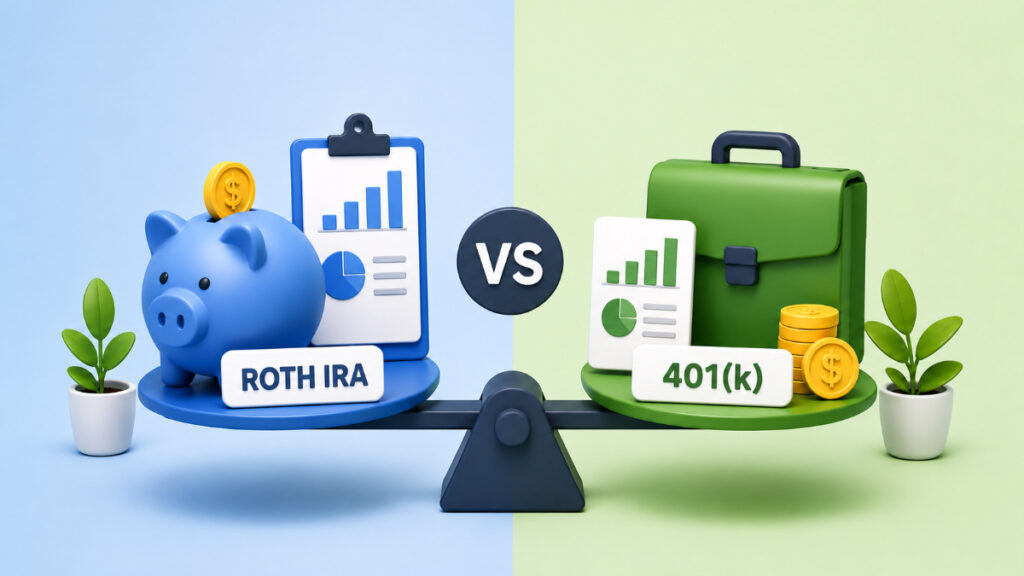
Roth IRA vs 401(k)
Another popular comparison is Roth IRA vs 401(k).
While both help you save for retirement, they operate differently.
Roth IRA Advantages
- More investment flexibility
- Tax-free withdrawals
- No required minimum distributions
- Greater control over investments
401(k) Advantages
- Employer matching contributions
- Higher contribution limits
- Payroll deductions
Many financial advisors suggest using both accounts when possible.
Roth IRA Benefits at a Glance
Here are some of the main benefits of opening a Roth IRA:

Tax-Free Growth
Investment gains can grow tax-free for decades.
Tax-Free Withdrawals
Qualified distributions are generally free from federal income tax.
Long-Term Compounding
The longer your money stays invested, the more compounding works in your favor.
Retirement Flexibility
You have greater control over when and how you withdraw funds.
Diversification
A Roth IRA can hold different types of investments.
Best Roth IRA Investments for Beginners
Opening a Roth IRA is only the first step.
The investments inside the account are crucial for long-term success.

Index Funds
Many investors choose low-cost index funds for their diversification and lower fees.
ETFs
Exchange-traded funds provide flexibility and broad market exposure.
Dividend Stocks
Dividend-paying companies can help generate long-term income.
Growth Stocks
Growth companies may offer higher returns over extended periods.
Target-Date Funds
These funds automatically adjust risk levels as retirement approaches.
How to Open a Roth IRA in 2026
Opening a Roth IRA is now easier than ever.

Step 1: Choose a Brokerage
Research reputable investment firms and compare features.
Consider:
- Fees
- Investment choices
- Customer service
- Research tools
Step 2: Complete the Application
Provide your:
- Name
- Address
- Social Security number
- Employment information
Step 3: Link Your Bank Account
Connect your checking or savings account.
Step 4: Fund Your Account
Transfer money into your Roth IRA.
Step 5: Choose Investments
Build a diverse portfolio aligned with your financial goals.
Step 6: Contribute Regularly
Consistency is one of the most effective wealth-building strategies.
Why a Roth IRA Is One of the Best Retirement Accounts
Many investors see a Roth IRA as one of the best retirement accounts because it offers tax-free growth and tax-free qualified withdrawals. Unlike many traditional retirement plans, a Roth IRA allows your money to grow for decades without future federal taxes on eligible withdrawals. This feature makes it especially appealing for long-term investors looking for financial independence and retirement security.
Pros and Cons of a Roth IRA
Pros
- Tax-free growth
- Tax-free qualified withdrawals
- No required minimum distributions
- Flexible withdrawal options
- Great for long-term investing
Cons
- No immediate tax deduction
- Income limits may apply
- Annual contribution limits
- Early withdrawal rules can be complex
Understanding both the pros and cons can help investors see if a Roth IRA fits their retirement plan.
Can You Lose Money in a Roth IRA?
A Roth IRA itself does not guarantee profits. The performance of your account relies on the investments you choose.
For example:
- Stocks can rise and fall.
- Mutual funds can experience market volatility.
- ETFs can lose value during market downturns.
The Roth IRA is simply a tax-advantaged account. Your investment choices determine your returns.
Long-term diversification can help reduce risk and improve portfolio stability.
How a Roth IRA Helps Build Financial Freedom
Financial freedom means having enough assets and income to support your lifestyle without depending entirely on employment income.
A Roth IRA can help achieve financial freedom by:
- Generating tax-free retirement income
- Supporting long-term wealth building
- Reducing future tax burdens
- Creating an extra retirement income source
Many FIRE (Financial Independence, Retire Early) investors use Roth IRAs as part of their long-term wealth strategy.
Roth IRA Checklist for Beginners
Before you open a Roth IRA, take a few minutes to ensure you’re ready for long-term investing and retirement planning. These basic steps can help you avoid common mistakes and start building wealth effectively.
- Confirm that you have earned income and qualify for a Roth IRA.
- Review the current Roth IRA contribution limits before making deposits.
- Check if your income is within the IRS income phase-out range.
- Research and choose a trustworthy brokerage or investment platform.
- Compare account fees, investment options, and available tools.
- Link your bank account for easy funding and automatic contributions.
- Build a diverse portfolio using stocks, ETFs, index funds, or mutual funds.
- Create a long-term investment plan based on your retirement goals.
- Set up monthly contributions whenever possible.
- Reinvest dividends to boost compound growth.
- Review your portfolio regularly and adjust as needed.
- Stay focused on long-term investing, not short-term market changes.
By following this checklist, beginners can open a Roth IRA with confidence and create a strong foundation for tax-free retirement savings.
How to Maximize Your Roth IRA Returns
If you want to get the most from your Roth IRA, consider these strategies:
- Invest consistently every month.
- Maximize annual contributions when you can.
- Focus on long-term investing.
- Reinvest dividends.
- Diversify across asset classes.
- Avoid emotional decisions in the market.
- Keep investment fees low.
Small changes in investing habits can make a huge difference over decades of compounding growth.
Who Should Consider a Roth IRA?
A Roth IRA might be a great choice for:
- Young professionals
- First-time investors
- Long-term savers
- Individuals expecting higher future tax rates
- People seeking tax-free retirement income
- Investors building a diverse retirement portfolio
While a Roth IRA isn’t ideal for every situation, it remains one of the most popular retirement accounts in the United States.
Understanding Roth IRA Withdrawal Rules
Knowing the withdrawal rules is essential.
Qualified Withdrawals
Generally tax-free if requirements are met.
Contribution Withdrawals
You can usually withdraw your original contributions without taxes or penalties.
Earnings Withdrawals
Investment earnings may face taxes or penalties if withdrawn too early.
Always understand IRS rules before taking distributions.
The Roth IRA Five-Year Rule Explained
One of the most misunderstood topics is the Roth IRA Five-Year Rule.
Generally, certain distributions must meet a five-year holding requirement to qualify for favorable tax treatment.
Understanding this rule can help prevent unexpected taxes and penalties.
Common Roth IRA Mistakes to Avoid
Many investors make mistakes that can hurt long-term returns.
Waiting Too Long to Start
Time is one of the most powerful factors in investing.
Missing Annual Contributions
Small contributions made consistently can grow significantly over time.
Ignoring Fees
High investment fees can eat into returns.
Lack of Diversification
Holding only one or two investments raises risk.
Trying to Time the Market
Consistent investing often outperforms emotionally driven decisions.
How Much Should You Contribute to a Roth IRA?
The right contribution depends on your:
- Income
- Financial goals
- Debt levels
- Emergency savings
- Retirement timeline
Many experts recommend contributing as much as possible within annual IRS limits.
Even small contributions can have a big impact over decades.
Roth IRA for Young Adults
Young adults are often in a great position to benefit from a Roth IRA. The main reason is time. Starting to invest early allows your money years to grow through compound interest.
For instance, someone who begins investing at 25 might contribute much less overall than someone who starts at 40, but they could still have a larger retirement portfolio because of the extra years of growth.
A Roth IRA can be particularly appealing for young professionals. They often find themselves in lower tax brackets early in their careers. Paying taxes now might be more advantageous than facing higher taxes during retirement.

Why Young Adults Should Consider a Roth IRA
- Tax-free retirement income
- Long-term compound growth potential
- Flexible contribution withdrawals
- No required minimum distributions
- Easy access to diverse investments
For young investors focused on retirement planning, opening a Roth IRA early can be one of the smartest financial choices they make.
Roth IRA for High-Income Earners
Many successful professionals reach income levels that limit their ability to contribute directly to a Roth IRA.
However, they don’t necessarily lose access to Roth benefits.
Many high-income earners look into strategies like a Backdoor Roth IRA, which offers a legal way to access tax-free retirement growth.
Benefits for High-Income Investors
- Tax diversification during retirement
- Potential tax-free withdrawals
- Estate planning benefits
- Long-term wealth preservation
Since retirement and tax situations can vary widely, many investors consult financial advisors or tax professionals before using advanced Roth strategies.
Backdoor Roth IRA Explained
The Backdoor Roth IRA is a strategy often used by those whose income exceeds direct Roth IRA contribution limits.
In simple terms, the strategy usually involves:
- Contributing to a Traditional IRA.
- Converting those funds to a Roth IRA.
- Following applicable IRS guidelines and reporting rules.
This strategy has grown in popularity among high-income professionals looking for extra tax-free retirement growth options.
Who Uses a Backdoor Roth IRA?
- Physicians
- Business owners
- Executives
- High-income professionals
- Experienced investors
Before pursuing this strategy, it’s essential to understand the potential tax implications and the relevant IRS rules.
Is a Roth IRA Worth It in 2026?
For many Americans, a Roth IRA remains one of the most appealing retirement accounts available.
It may be especially valuable if:
- You anticipate a higher future tax rate.
- You seek tax-free retirement income.
- You’re investing for the long term.
- You value flexibility and control over your retirement savings.
While every investor’s situation is unique, the tax benefits and growth potential of a Roth IRA continue to make it a favored option for retirement planning in 2026.
Frequently Asked Questions (FAQs)
What Is a Roth IRA?
A Roth IRA is an individual retirement account funded with after-tax dollars that provides tax-free growth and tax-free qualified withdrawals during retirement.
How Does a Roth IRA Work?
You contribute money after paying taxes, invest the funds, and potentially enjoy tax-free growth and tax-free qualified withdrawals later in life.
Can I Have Both a Roth IRA and a 401(k)?
Yes. Many investors use both accounts as part of a complete retirement strategy.
Is a Roth IRA Better Than a Traditional IRA?
The answer relies on your current income, expected future tax rate, and financial goals.
Can I Open a Roth IRA Online?
Yes. Most major brokerages allow investors to open and fund a Roth IRA entirely online.
Is a Roth IRA Good for Beginners?
Absolutely. A Roth IRA is often viewed as one of the best retirement accounts for beginners thanks to its flexibility and tax benefits.
Final Thoughts

A Roth IRA remains one of the most effective tools for building long-term, tax-efficient retirement wealth. By allowing investments to grow tax-free and providing tax-free qualified withdrawals, it offers advantages that can greatly improve your financial future.
Whether you’re a young professional just starting in investing, a mid-career worker building retirement savings, or a high-income earner exploring advanced retirement strategies, a Roth IRA can be a key part of your financial plan.
Understanding what a Roth IRA is, how it works, how to open one, and how to maximize its benefits can help you develop a stronger retirement strategy and move closer to long-term financial independence.
If you’re eligible to contribute, starting early, investing consistently, and focusing on long-term growth may be some of the best steps toward a secure and comfortable retirement.
Written by Finphantix